
You finished the puzzle, clicked in the last piece, and now it looks too good to pack back into the box. That is exactly why people ask how to frame plastic puzzles - they are built for display in a way cardboard puzzles often are not. With interlocking pieces that hold together firmly and no glue required, plastic puzzles make the jump from pastime to wall art much easier.
The good news is that framing a plastic puzzle is usually simpler than people expect. The better news is that if you do it properly, you keep that clean finished look without warping, sticky residue, or the risk of ruining a premium design you might want to keep for years. Whether you are decorating a hallway, styling a child’s room, or turning a gift puzzle into a keepsake, the right frame setup makes all the difference.
How to frame plastic puzzles without glue
The biggest advantage of premium plastic puzzles is right there in the material. Unlike many cardboard puzzles, they do not need puzzle glue spread across the front just to stay together. That means no cloudy finish, no drying time, and no mess around the edges.
Start by checking that every section of the puzzle is locked in tightly. Run your hands gently across the surface and make sure there are no raised corners or loose joins. Plastic puzzles tend to click together firmly, but large designs can still flex if you lift them too quickly from one side.
If your puzzle was assembled on a mat or board, slide a stiff backing board underneath before moving it. Foam board, MDF backing, or a solid frame insert all work well. The goal is simple - keep the puzzle flat and fully supported while you transfer it into the frame.
For smaller plastic puzzles, you may be able to lift the finished piece in one go. For larger sizes, it is safer to sandwich it between two flat boards and flip it carefully. This reduces strain through the middle and helps avoid separating the design.
Choosing the right frame for a plastic puzzle
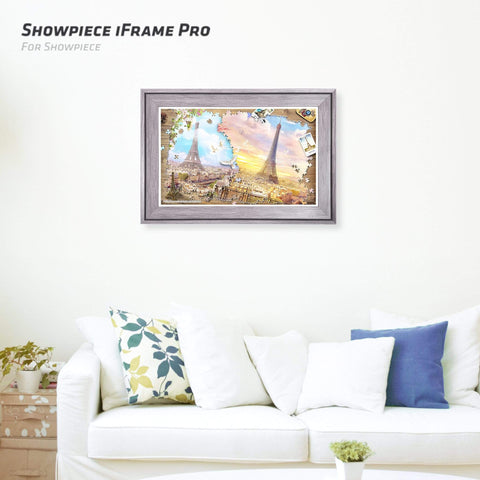
A good frame does two jobs. It protects the puzzle and makes it look like intentional décor rather than something temporary pinned to the wall. That is why the frame choice matters almost as much as the puzzle itself.
The first thing to check is size. Measure the completed puzzle exactly, not just the stated box size. Some puzzle dimensions include a small tolerance, and a frame that is even slightly too tight can press awkwardly against the edges. Too loose, and the puzzle may shift inside the frame over time.
Shadow box frames can be an excellent option for thicker plastic puzzles because they offer a little more internal depth. Standard frames work too, especially for flatter puzzle styles, but you need enough room for the puzzle, the backing board, and the front cover if you are using one.
Glass gives a polished finish, though it is heavier and more breakable. Acrylic is lighter and practical for family homes, kids’ rooms, or areas where you want less weight on the wall. If glare is a concern, especially near windows, a low-glare acrylic or glass front can be worth considering.
Frame colour comes down to the look you want. A black or white frame keeps things crisp and gallery-like. Timber tones can soften the presentation and work well in warmer interiors. If the puzzle artwork is bold and colourful, a simple frame usually lets the design do the talking.
Should you use a front cover at all?
With some plastic puzzles, you can frame without glass or acrylic at the front, particularly if the puzzle is going in a low-traffic area and you want to show off the texture. That said, a front cover gives better protection from dust, kitchen grease, and curious fingers.
It depends on where the piece will hang. In a living room or bedroom, open framing can look striking. In a hallway, playroom, or family zone, enclosed framing is the safer long-term choice.
The best backing methods for display
Because plastic puzzles are more rigid than cardboard, they usually sit nicely on a backing board without needing adhesive. This is one of the main reasons they are so display-friendly.
A snug frame with a firm back panel may be enough to hold the puzzle in place. If there is a little extra room, you can use acid-free mounting corners, edge supports, or small archival tabs on the reverse side. These keep the puzzle steady without gluing the front or damaging the artwork.
Try to avoid strong permanent adhesives unless you are certain you never want to remove the puzzle again. One of the joys of a premium plastic puzzle is that it is collectible and reusable. A non-permanent framing method gives you options later.
If you want extra stability, a thin non-slip sheet between the puzzle and backing board can help reduce movement. Just make sure it lies perfectly flat and does not create bumps under the finished piece.
What about double-sided tape?
It can be tempting, especially for a quick fix, but double-sided tape is a bit of a mixed bag. It may hold the puzzle down, but it can also leave residue or put uneven tension on the back. If the puzzle ever needs to come out, tape often turns a simple job into a frustrating one.
For most display-ready plastic puzzles, firm frame pressure and proper support are enough. Less fuss, cleaner result.
How to frame plastic puzzles for the wall
Once the puzzle is inside the frame, check that it is sitting square before sealing the back. This step is worth slowing down for. A slightly crooked puzzle becomes very obvious once it is on the wall.
Secure the frame backing tightly so the puzzle does not shift. If your frame has flexible tabs, press them down evenly around the edges. If it uses turn buttons or clips, make sure each one is firm but not over-tightened.
Before hanging, clean the inside of the glass or acrylic properly. Dust trapped inside the frame will stand out far more once the artwork is mounted. A microfibre cloth is usually enough.
For hanging, use hardware suited to the frame size and weight. Larger framed puzzles should not rely on a single flimsy hook. Picture hanging strips can work for lighter pieces, but heavier frames are better on proper wall hooks or screws. In New Zealand homes, where walls vary from plasterboard to more solid surfaces, matching the fixing to the wall type is just smart practice.
Placement matters too. Avoid direct harsh sun if you want the colours to stay vibrant for the long haul. Plastic puzzles are durable and water resistant, but framed art still looks best away from strong UV exposure and damp spots.
Common mistakes when framing plastic puzzles
The most common mistake is treating a plastic puzzle exactly like a cardboard one. People reach for glue automatically, even when the puzzle does not need it. That usually adds work without adding value.
Another issue is choosing a frame based only on the box piece count instead of the actual finished dimensions. Piece count does not tell you thickness or exact width and height, so always measure.
Rushing the transfer is another easy way to split the puzzle apart. Even premium interlocking pieces need proper support when moved. A backing board turns a stressful lift into a quick, controlled step.
And finally, do not ignore the room itself. A puzzle framed for a bathroom, busy family room, or sunny entranceway may need different protection than one styled in a quiet study.
When a custom frame is worth it
Off-the-shelf frames are often perfect for standard puzzle sizes, and they are a great place to start if you want a simple, budget-friendly display. But some plastic puzzles, especially collectible or specialty formats, look far better in a custom frame.
Custom framing is worth considering if the puzzle has unusual dimensions, a premium finish, or a design you really want to elevate. It also gives you more control over depth, border spacing, and materials. For gift-worthy pieces or statement wall art, that extra polish can be well worth it.
If you are buying a puzzle specifically because it is display-ready, this is where quality pays off. At Puzzle Art Store, that no glue needed, easily framed appeal is part of what makes premium plastic puzzles so satisfying - you can enjoy the build and still end up with something stylish enough to keep on show.
A finished plastic puzzle should feel like more than a completed activity. Frame it well, and it becomes part of your space - colourful, durable, and ready to be admired long after the final piece clicks in.


Comments (0)
There are no comments for this article. Be the first one to leave a message!