
A finished puzzle deserves better than a quick photo before it goes back in the box. Whether it is a colourful 1,000-piece landscape, a sweet kids’ design or a collectible artwork for the lounge, the puzzle frames versus glue decision changes how your finished piece looks, lasts and lives in your home.
For traditional cardboard puzzles, glue has long been the default way to hold everything together. Frames deliver a more polished result, but usually need a puzzle to be secured first. Premium plastic puzzles change that familiar equation: their firm, precision-fit pieces lock together, so the finished image can stay intact without glue and be displayed with far less fuss.
Puzzle frames versus glue: the real difference
Glue is an adhesive solution. It is brushed or spread across the front or back of a completed puzzle to turn individual pieces into one fixed panel. A frame is a display solution. It gives the puzzle an edge, a finished presentation and, when fitted with a clear front, protection from dust, bumps and everyday life.
They are not always direct alternatives. With a loose-fitting cardboard puzzle, glue may be the practical step before framing. With a well-made plastic puzzle, you can skip that step and choose a frame simply because you love the gallery-style finish.
That distinction matters. If you enjoy changing your décor, gifting completed puzzles or storing them safely between displays, permanent glue can be limiting. If you have a much-loved cardboard puzzle that is already lifting at the edges, glue may be exactly what it needs before it goes on the wall.
What glue does well
Puzzle glue is affordable and easy to find. It can rescue a completed cardboard puzzle whose pieces shift as soon as you try to move it. Once dry, it creates a single piece that can be mounted onto backing board or placed into a frame.
It also suits a puzzle you are certain you want to keep forever. For a sentimental family project, a child’s first big puzzle or an artwork you have no intention of taking apart, permanence can feel like a benefit.
The trade-off is that glue is messy, irreversible and rarely invisible. Applied to the image side, it can leave a sheen or alter the texture of the artwork. Applied to the back, it requires carefully flipping the entire puzzle first, which is often the moment a loosely connected cardboard puzzle decides to come apart. Glue also cannot be undone if you later want to rebuild the puzzle or pass it on as a complete, reusable set.
What a frame does well
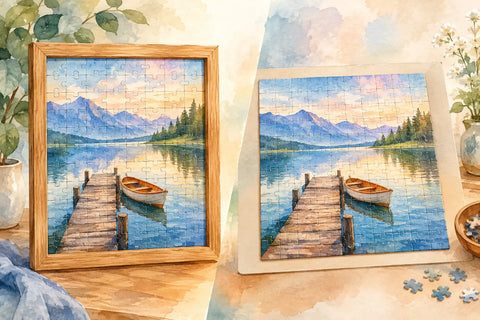
A frame makes a finished puzzle look intentional. It turns a fun afternoon at the table into wall art for a bedroom, office, bach or family living space. The right frame can pick up a colour from the artwork, suit timber furniture or keep the look clean and modern with a slim black or white edge.
Frames protect the puzzle from grubby fingers, dust and accidental knocks, especially in busy households. They also hide the raw outer edges of the puzzle, which gives the finished image a crisp, display-ready boundary.
The catch is sizing. Puzzle dimensions vary, even between puzzles with the same piece count. Measure the completed puzzle, not just the number printed on the box, and check whether the frame’s stated size refers to the image opening or the full inner space. A frame that is only a few millimetres too small can bow the puzzle, while one that is too large can leave it sliding around.
Why plastic puzzles make the choice easier
Premium plastic puzzles are made for the moment after completion as much as the time spent puzzling. The pieces connect firmly and the finished puzzle forms a stable panel, removing the usual need to brush on adhesive before moving it.
That means you can lift the completed puzzle carefully, place it into a suitable frame and enjoy a clean result without glue marks, drying time or a sticky kitchen table. Many designs can also be displayed on a shelf, ledge or picture stand without framing at all, depending on their size and intended format.
Water resistance is another practical advantage. A splash during a busy weekend does not have to spell disaster in the same way it can for cardboard. It is still sensible to treat any finished puzzle as décor rather than leaving it in wet or direct-sun conditions, but durable plastic offers reassuring everyday resilience.
At Puzzle Art Store, this is part of the appeal of premium Pintoo-style and PieceRelax® puzzles: they are made to become art, not disposable cardboard. The finished image stays together beautifully, giving you more freedom to frame it, showcase it or simply admire it as a collectible piece.
Choose glue when permanence is the priority
Glue can be the sensible choice when the puzzle is cardboard, loosely connected and destined for one permanent home. It is also useful if you have found a frame you love but want the puzzle firmly bonded to backing board before it goes inside.
Take your time if you go this route. Work on a completely flat surface, protect the table underneath, make sure every piece is sitting properly and follow the adhesive instructions. Avoid adding too much product at once. A thin, even layer is usually better than flooding the joins and hoping for the best.
Think carefully before gluing a limited-edition or collectable puzzle. Once it is bonded, it no longer offers the full puzzle experience to its next owner, and it cannot be rebuilt. That may be fine for your own display piece, but it is worth deciding before the glue comes out.
Choose a frame when presentation matters most
A frame is the standout choice when the artwork deserves to look like part of your home. It is particularly effective for striking illustrations, travel scenes, botanicals, famous artworks, whimsical animal designs and family-friendly puzzles that deserve a place beyond the dining table.
For a clean display, select a frame with enough depth for the puzzle and its backing. A rigid backing board helps prevent bending, while clear acrylic or glass protects the front. Acrylic is lighter and can be a practical option for large pieces or children’s rooms. Glass often offers a more traditional, premium finish, but it is heavier and needs more care when hanging.
If you are framing a no-glue plastic puzzle, assemble it on a board close to the frame size where possible. Slide a second board over the top, hold the sandwich firmly and turn it over carefully. This makes moving the completed artwork much less stressful. Once it is in the frame, check that the backing is secure but not pressing so hard that it distorts the puzzle.
A quick decision guide for your finished puzzle
Choose glue if you have a standard cardboard puzzle, need to stabilise loose pieces and want a permanent result on a modest budget. Choose a frame if you want a polished décor piece, protection from dust and a finish that looks at home on the wall.
Choose both for a cardboard puzzle that needs stability and a formal presentation. Choose neither, or frame only, for a precision-fit plastic puzzle that already holds together securely. A display stand can be enough for compact designs, while functional 3D puzzle vases, clocks, planters and globes are made to be enjoyed in the room rather than hidden behind glass.
Do not forget the room you are displaying it in
Where the puzzle will live should guide your choice. A hallway wall needs a secure frame because it is more likely to be bumped. A sunny spot may call for a position away from harsh direct light to help preserve the artwork’s colour. A child’s bedroom benefits from a lightweight, securely hung display rather than a heavy glass frame within easy reach.
Also consider whether this is seasonal décor or a long-term favourite. A Christmas puzzle may be more fun to rebuild next year than glue permanently. A design that perfectly suits your lounge colour palette may earn its place on the wall for years.
The best display method is the one that matches both the puzzle and the life you want it to have. If the pieces already lock together beautifully, skip the glue and let the artwork speak for itself. Add a frame when you want that finished puzzle to feel less like a project you completed and more like a piece of art you chose.
Comments (0)
There are no comments for this article. Be the first one to leave a message!