
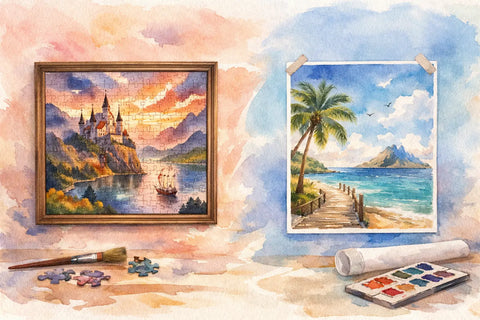
A poster can fill an empty wall in minutes. A finished puzzle earns its place there piece by piece. That is the real difference in puzzle frames versus posters: one is chosen, unrolled and hung; the other becomes a personal achievement before it becomes décor.
For homes that value colour, creativity and a little more personality than a standard print, both can work beautifully. The better choice depends on the room, the artwork, the person hanging it and how much you want the final piece to say about you.
Puzzle Frames Versus Posters: The Quick Difference
Posters are an easy way to bring in large-scale artwork without a large price tag. They suit changing tastes, rental homes, themed bedrooms and anyone who enjoys refreshing their walls often. A poster can be bold, graphic, nostalgic or playful, then swapped out when the mood changes.
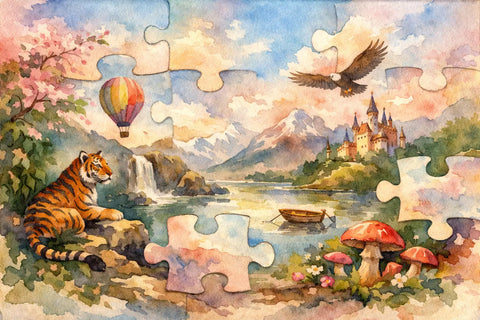
A framed puzzle has a different energy. It starts as screen-free fun, a mindful weekend project or a family activity around the table. Once complete, it becomes a display piece with a story behind it. The image matters, but so do the hours spent finding that last tiny section of sky, flowers or ocean.
Traditional cardboard puzzles can be tricky to display. Pieces may lift, edges can bow and most need glue before framing. Premium plastic jigsaw puzzles change that equation. Their firm interlocking pieces stay together, so the finished design can be moved, framed and showcased without glue. For a display-minded puzzler, that is a major advantage.
When a Poster Makes More Sense
A poster is hard to beat when speed and flexibility matter most. If you are styling a first flat, a child’s room that changes with every new favourite character, or a temporary work-from-home corner, posters make decorating feel low-pressure. They are usually light, easy to transport and available in an enormous range of styles.
They can also be the right choice when the artwork needs to be large. A single oversized poster above a sofa or bed creates instant impact, particularly when framed well. The frame is doing a lot of the work here: a crisp white border and quality frame can make an inexpensive print look considered rather than temporary.
The trade-off is that a poster is generally more vulnerable to fading, creasing and moisture. New Zealand homes can have sunny rooms, damp-prone spaces and busy family zones, so paper-based art needs thoughtful placement. Keep posters away from direct sun, steam and areas where little hands or pets are likely to bump them.
Posters also offer less of a personal connection unless the image itself has special meaning. That does not make them less valuable. It simply means they are decorative from the start, rather than decorative after an experience.
Why a Framed Puzzle Feels Different
A framed puzzle adds texture that a flat print cannot quite reproduce. From a distance, it reads as a complete image. Up close, the individual pieces reveal the construction, colour changes and clever details of the artwork. Guests notice it twice: first as wall art, then as a puzzle you actually completed.
That layered appeal makes puzzle art especially good for lounges, studies, creative spaces and family rooms. A beautiful landscape can bring calm. A vibrant illustration can brighten a hallway. A detailed city scene or classic artwork can become a conversation starter near the dining table.
There is also a satisfying sense of permanence. Instead of breaking up a puzzle after the final piece is placed, you can turn the finished result into something that continues to bring enjoyment. For collectors, this helps justify choosing designs that are as visually striking as they are fun to build.
With water-resistant plastic pieces, display is more forgiving than it is with cardboard. Accidental splashes are less alarming, and the pieces retain their shape well. That does not mean a finished puzzle should be treated roughly or hung in a dripping bathroom, but it does make it a practical choice for real homes rather than museum-only walls.
No glue needed is more than a convenience
Glue can alter the look of a puzzle, leave a shine across the surface or seep between pieces. It also makes the process final. Once glued, there is no going back.
Premium interlocking plastic puzzles remove that extra step. The pieces hold firmly together, allowing you to lift the completed puzzle carefully and place it into a suitable frame. The result looks clean, preserves the individual piece detail and keeps the focus on the artwork rather than a layer of adhesive.
For gift buyers, this is particularly appealing. You are not giving someone one evening of entertainment. You are giving them a project and a possible keepsake for their wall.
Think About the Room Before the Artwork
The most successful wall art fits the way a room is used. In a sunny living room, choose colours that you will be happy to see every day and position any paper poster away from harsh direct light. In an entryway, a framed puzzle can set a warm, creative tone as soon as people walk in. In a child’s bedroom, a poster may be easier to update as interests grow, while a completed junior puzzle can celebrate a special milestone.
Scale matters as much as style. A small framed puzzle can look lost above a large sofa, while a very busy poster may overwhelm a compact room. Before committing, use painter’s tape to mark the approximate size on the wall. It takes five minutes and can prevent a disappointing purchase or framing decision.
Consider the surrounding colours too. A puzzle full of lush greens and blues can soften a neutral room. Bright pop-art posters can energise a plain space. If your furniture and walls are already patterned, choose artwork with a clearer focal point so the room does not feel cluttered.
The Cost Question: Cheap Now or Worth Keeping?
Posters often win on upfront price, particularly if you are decorating several walls at once. But a poster may need replacing after a move, a change in taste or a few years of sunlight. Its value is in quick visual impact and variety.
A framed puzzle has more stages: the puzzle itself, your time, and usually a frame. Yet it offers entertainment before it becomes décor. If you enjoy puzzling, that changes the value calculation. You are paying for a creative activity, a finished artwork and a memory attached to it.
It depends on what you want from the purchase. If you need wall art for a party next weekend, choose a poster. If you want a piece that feels personal, durable and display-ready, choose a puzzle design you will still love after the final piece clicks into place.
Choosing the Right Puzzle to Frame
Not every completed puzzle needs to go on the wall. Reserve framing for designs with strong colour, a clear composition and a size that suits your space. Highly detailed images can look remarkable in a frame, but make sure they still read well from a few steps back.
Choose a frame that supports, rather than competes with, the artwork. A simple black, white, timber-look or metallic frame is often enough. Measure your completed puzzle carefully before buying anything, as puzzle sizes vary between brands and piece counts. A snug fit helps keep the artwork flat and protected.
If you are giving a puzzle as a present, think beyond the image. A colourful floral design may suit a housewarming gift. A striking globe, clock or 3D puzzle vase can work for someone who prefers functional décor. A child might treasure seeing their own completed puzzle displayed at eye level. The best choice feels like it belongs to the person, not just the wall.
Let Your Wall Art Have a Story
There is no rule that says posters are lesser art or that every puzzle must be framed. A poster can capture a favourite film, artist or era perfectly. A puzzle can be completed once, admired for a while and then packed away to enjoy again later.
But if you love the idea of art you can make yourself, a premium puzzle offers something posters cannot: participation. Choose an image that makes you want to sit down, sort the pieces and stay with it. When it is finished, give it a frame and let your wall show more than your taste - let it show what you made.
Comments (0)
There are no comments for this article. Be the first one to leave a message!