
A misty mountain lake above the sideboard. A bright European street scene in the hallway. A sunlit coastal view where guests can actually stop and look closely. The best scenic puzzles for homes do more than fill a quiet afternoon - they give you a finished artwork with a story behind every piece.
For home decorators, collectors and gift buyers, scenic puzzles are one of the easiest ways to bring colour, travel memories and a little creative satisfaction into a room. The right image can work like wall art, but the process of building it makes the final display feel far more personal.
How to choose the best scenic puzzles for homes
A scenic puzzle earns its place on the wall when the image has enough detail to reward a second look. Think layered landscapes, lively city architecture, patterned gardens, rolling vineyards and coastal scenes with shifting shades of blue. These images give puzzlers plenty to work with while creating a finished piece that still looks interesting from across the room.
The scene should also suit the feeling of the space. A quiet alpine view is ideal for a bedroom or reading nook, where softer greens, greys and blues create a restful mood. A colourful harbour, market street or flower-filled village brings energy to an entryway, dining room or family area. If your home leans modern, look for crisp photography, dramatic skies and clean architectural lines. If it is more eclectic, richly detailed illustrated scenes can add warmth without looking too formal.
Scale matters as much as subject. A smaller scenic puzzle can sit beautifully on a shelf, desk or gallery wall alongside photographs and prints. A larger piece creates a focal point above a console or in a spacious living area. Before choosing, measure the display spot and allow room for a frame or a narrow border around the finished image. That small check helps avoid completing a puzzle you love, only to find it overwhelms the intended wall.
Pick detail that matches your puzzling style
Scenic images can be wonderfully satisfying, but not every view offers the same level of challenge. Wide areas of sky, sea or forest can test patient puzzlers, especially when several pieces share similar tones. That is part of the appeal for some people. For others, a scene with distinct buildings, boats, flowers, signage or changing textures offers more obvious starting points and a faster, more relaxed build.
A good middle ground is a landscape with clear foreground detail and a more open background. You can begin with recognisable features, then settle into the more challenging water or sky once the structure is in place. It keeps the experience engaging without turning a rainy-weekend activity into a frustrating mission.
Choose materials made for display
Traditional cardboard puzzles can be lovely to build, but they are not always designed for a long life on the wall. Corners can lift, pieces may separate, and the finished puzzle often needs glue before it can be moved. That creates a trade-off: the puzzle is finished, but it can become difficult to handle or frame neatly.
Premium plastic jigsaw puzzles are a smart choice when display is part of the plan from the beginning. Their firm, precision-fit pieces stay connected, so there is no glue needed before framing or showcasing. Water-resistant pieces are especially practical in busy homes, where a knocked-over drink or an enthusiastic helper should not spell the end of your artwork.
At Puzzle Art Store, authentic Pintoo-style and PieceRelax® plastic puzzles are made for this kind of finish. The pieces click together securely, the printed image stays crisp, and the completed puzzle can move from table to display without the nervous shuffle usually required with a cardboard puzzle.
Scenic styles that work in different rooms
The best scene is not always the most dramatic one. It is the one that belongs in the room you see every day. Consider the furniture, existing artwork and natural light before choosing your puzzle image.
Coastal scenes for airy, relaxed spaces
Beaches, lighthouses, sailing boats and ocean lookouts suit homes with pale timber, linen textures, white walls and natural fibres. Blue is naturally calming, although a coastal scene with orange sunset light can add welcome warmth to a cooler room. In a compact space, choose a view with a visible horizon line. It creates a sense of openness without adding visual clutter.
Mountain and forest views for a grounded feel
Snowy peaks, autumn trees, waterfalls and misty valleys bring depth to a room. They work particularly well in studies, bedrooms and living spaces with darker timber, olive tones or earthy ceramics. A forest puzzle with many similar green pieces can be challenging, so it is best for someone who enjoys taking their time. If the puzzle is intended as a gift, a mountain village or lake scene with stronger colour variation is often more approachable.
City scenes for colour and conversation
Detailed cityscapes are made for social spaces. They have windows, rooftops, street lamps, bicycles, café tables and tiny moments that draw people in. A bright city puzzle can bring character to a plain dining area or enliven an apartment hallway where there is not much space for larger décor.
City scenes also make excellent gifts for travellers and people who are hard to buy for. Rather than giving a generic print, you are giving them an activity, a display piece and a small reminder of somewhere they would love to visit.
Gardens and countryside for warmth
Flower gardens, cottages, farms and colourful fields feel generous and cheerful. They are especially good for family rooms, kitchens and homes that already use warm timber, soft green or floral accents. Look for scenes with enough contrast between petals, paths, sky and buildings to keep the build enjoyable for more than one person.
Make the finished puzzle look intentional
A completed scenic puzzle should look like chosen décor, not a leftover project. Start with a clean surface and make sure every edge is properly connected. With quality interlocking plastic pieces, you can lift the finished work carefully as one piece, which makes checking placement and framing much easier.
A simple frame in black, white, natural timber or a colour that picks up one shade from the image is usually enough. Let the scene be the hero. If the puzzle has a particularly detailed border, use a frame with a narrow profile so it does not hide the artwork’s outer edges.
For a gallery-wall effect, combine one finished scenic puzzle with two or three pieces that share its palette, such as travel photos, small art prints or a matching puzzle magnet. Keep the gaps consistent and avoid crowding every item together. Scenic art needs a little breathing room, especially when the image already contains plenty of detail.
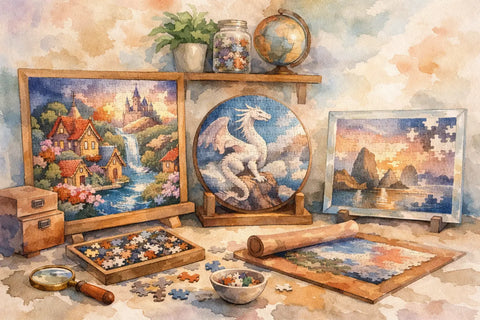
If you prefer not to frame immediately, display the puzzle upright on a shelf with a stable stand. This works best with smaller formats and gives you the freedom to rotate scenes with the seasons. A bright floral view in spring, a beach scene in summer, and a snowy village when the evenings turn cooler can make your décor feel fresh without replacing everything in the room.
A better gift than another generic homeware item
Scenic puzzles are particularly strong gifts because they suit more than one kind of recipient. The serious puzzler gets the challenge. The design lover gets a finished artwork. A family gets an activity that can be shared across the table, then kept as a memory rather than packed away in the cupboard.
Match the piece count to the recipient’s habits. A larger count suits experienced puzzlers who enjoy a long project and have a dedicated table. A more manageable format is ideal for busy parents, first-time adult puzzlers or anyone living in a smaller home. The scene itself matters too: choose bold colours and recognisable details for an easy-going gift, or subtle landscapes and intricate architecture for someone who enjoys a real challenge.
The most memorable scenic puzzles are the ones people want to complete and want to keep. Choose a view that makes you pause, give it the display space it deserves, and let every fitted piece become part of the room.

Comments (0)
There are no comments for this article. Be the first one to leave a message!