
A completed jigsaw that buckles at the corners, sheds pieces when lifted and ends up back in its box is fine for a rainy afternoon. But if you have spent hours building a beautiful image, it deserves a better finish. This Piece Relax puzzle review looks at what makes these premium plastic puzzles different, who will enjoy them most and whether they genuinely earn a place on your wall, shelf or gift list.
What makes a PieceRelax puzzle different?
PieceRelax puzzles are made from rigid plastic rather than conventional cardboard. That sounds like a small material change, but it alters the whole experience. The pieces are designed to click firmly together, creating a finished puzzle that holds its shape without glue. You can carefully lift it, move it into position or prepare it for framing without the usual anxious scramble to keep every section intact.
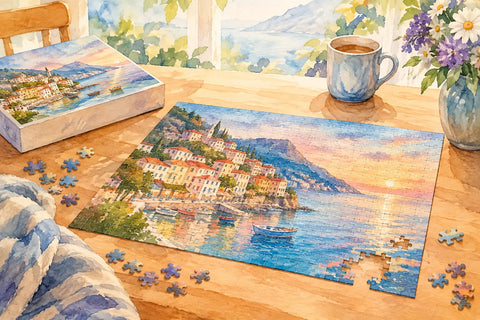
The other standout is water resistance. A cardboard puzzle and a cup of tea are not natural companions. With a plastic puzzle, an accidental splash is far less likely to ruin your progress. That does not mean it should be soaked or put through the dishwasher, but it is a reassuring advantage for busy family tables, apartment living and homes where a puzzle may be left out between sessions.
Then there is the finish. PieceRelax designs are chosen to look good after the last piece goes in, not merely to provide an evening of entertainment. Rich artwork, crisp printing and a clean-edged completed surface make these puzzles feel closer to a display object than a temporary tabletop activity.
Piece Relax puzzle review: the build experience
The feel of a puzzle is usually decided by three things: piece fit, image clarity and how satisfying the final assembly feels. On the first point, plastic is a genuine upgrade. The pieces have a precise, positive connection, so sections stay together as you work. If you like building the border first and then shifting it to make room, you will appreciate that stability immediately.
That firmness can bring a small adjustment period. Cardboard puzzlers are used to gently testing a piece and relying on the image to confirm it. With PieceRelax, the fit is more deliberate. A correct piece feels secure; an almost-right piece will usually make itself known. It is a pleasingly tactile process, though younger children may need a little help separating pieces if they have pressed them together firmly.
Image quality also matters, especially on artwork with large areas of similar colour. A premium puzzle should give you details to work with: changes in texture, linework, shading and colour variation. The best PieceRelax designs reward close looking, whether you are working through florals, scenic views, animal art or a striking decorative illustration.
Difficulty still depends on the image and piece count. A bold, high-contrast design is a friendly choice for a casual family session or a gift recipient who is new to plastic puzzles. Fine art, repeated patterns and moody tonal scenes can be more demanding, even at a moderate piece count. Choose for the person, not just the picture.
Is the finished puzzle really display-ready?
This is where the format shines. Traditional puzzles often need puzzle glue, backing boards and considerable patience before they can become wall art. A PieceRelax puzzle is made to hold together on its own. No glue needed is more than a tidy feature claim - it removes the mess and uncertainty that stop many completed puzzles from ever being displayed.
For framing, measure the completed puzzle rather than guessing from its piece count. A simple frame can make the artwork look polished in a lounge, bedroom, study or creative nook. Because the puzzle is plastic, it can also suit display approaches that would be risky with cardboard, such as carefully relocating it from a dining table to a framing surface.
There is a practical trade-off. The rigid pieces give the completed image a subtly structured, tiled texture rather than the flat surface of a print. For many puzzlers, that is part of the charm: the joins are visible proof of the hours spent creating it. If you want a completely smooth art print effect, a framed print may be the better choice. If you want a conversation-starting artwork that you built yourself, this format is hard to beat.
Beyond a flat puzzle
The PieceRelax range is especially appealing because plastic puzzling can move beyond a standard rectangle. Depending on the design, you may find decorative 3D formats that become functional objects, including vases, planters, clocks or globes. These make the puzzle process feel even more purposeful. You are not only finishing an image - you are building something with a role in your home.
3D designs do ask for a little more care with instructions and assembly order. They are usually best for a puzzle fan who enjoys construction as much as picture sorting. For a relaxed first purchase, a 2D puzzle is generally the easiest place to start.
Who should buy a PieceRelax puzzle?
These puzzles are particularly good for adults who want their hobby to leave something beautiful behind. They suit collectors who enjoy trying distinctive formats, design-conscious gift buyers and anyone who has ever completed a lovely cardboard puzzle only to wonder what to do with it next.
They also make strong gifts because the value is easy to understand. The recipient gets an enjoyable hands-on activity, a durable finished piece and potential home décor in one box. For birthdays, housewarmings, Mother’s Day or Christmas, choose an image that reflects the recipient’s taste rather than simply selecting the largest piece count. A favourite animal, an elegant floral scene or a colour palette that works in their home will make the gift feel considered.
Families can enjoy them too, with the right design and age level. The washable, sturdy nature of plastic is handy around children, but smaller pieces are still not suitable for very young kids. A junior option or a lower piece count gives children the satisfaction of completing something without turning the experience into a marathon.
Things to consider before choosing one
Price is the main comparison point against standard cardboard puzzles. Plastic construction, precision-cut pieces and display-ready durability usually place PieceRelax products at a more premium level. If your ideal puzzle is a one-off activity you are happy to pack away afterwards, cardboard may offer more pieces for your budget.
But value changes when you intend to keep the result. There is no need to buy glue, there is less risk of damage from a spill and the completed work is strong enough to frame or showcase. For a design you truly love, it can be better value than buying a puzzle and a separate piece of wall art.
Storage is worth thinking about as well. Loose pieces should remain in their box or a sealed container, especially in homes with pets or small children. Once complete, decide whether you will frame it, display it on a shelf or carefully store it flat. The puzzle is durable, but a finished artwork still deserves protection from bending, direct sunlight and accidental knocks.
Our verdict on PieceRelax puzzles
PieceRelax offers a satisfying answer to a familiar puzzle problem: what happens after the final piece? The secure interlocking system, water-resistant plastic and display-friendly finish turn puzzling into something more lasting. It is a premium choice, and it will appeal most to people who value the artwork as much as the assembly.
For New Zealand puzzle lovers looking for a giftable, collectible alternative to disposable cardboard, it is a format well worth trying. Puzzle Art Store stocks authentic PieceRelax designs for puzzlers who want the joy of making something by hand and the pleasure of seeing it stay on display long after puzzle night is over. Pick an image you would happily live with, clear a table and let the finished picture earn its place in your home.


Comments (0)
There are no comments for this article. Be the first one to leave a message!