
A completed puzzle deserves better than a quick photo before it goes back in the box. Puzzle frame quality is what turns hours of satisfying puzzling into a polished piece of wall art - one that sits flat, suits the room and keeps its colour looking fresh. For premium plastic puzzles, framing can be especially rewarding: the firm interlocking pieces hold together without glue, so your finished artwork is ready to display.
The right frame is not simply the most decorative one. It needs to match the puzzle’s exact dimensions, protect the image and complement the design without stealing the spotlight. Whether you are framing a calm landscape for the lounge, a bright artwork for a child’s room or a special gift, a few details make a noticeable difference.
What Puzzle Frame Quality Really Means
A quality puzzle frame does three jobs at once. It presents the completed image neatly, supports it properly and helps protect it from dust, fading and everyday knocks. If one of those elements is missing, even a beautiful puzzle can look unfinished.
Fit comes first. A frame that is too tight can press against the edges and cause bowing, while one that is too loose lets the puzzle shift around. This matters particularly with plastic jigsaw puzzles, where precisely made pieces create a clean, structured surface. A snug, well-measured fit lets that satisfying precision show.
The front covering matters too. Clear acrylic is light and less prone to shattering, which makes it a practical choice for busy family homes or larger displays. Glass can offer a crisp, premium finish, but it is heavier and needs more careful handling. If the puzzle will hang in a bright room, UV-filtering glazing is worth considering because sunlight can gradually dull printed colours.
Finally, look at the backing. A solid backing board keeps the finished puzzle supported across its whole surface. Thin, bendy backing can lead to a wavy result over time, especially if the frame is moved, stored upright or displayed somewhere with changing temperatures.
Start With the Finished Puzzle, Not the Piece Count
Piece count is useful for choosing a challenge, but it is not a framing measurement. Two 1,000-piece puzzles can have completely different finished sizes, and even puzzles with the same number of pieces may vary by brand and format.
Before shopping for a frame, complete the puzzle on a clean, flat surface and measure the final image carefully. Measure the width and height in millimetres, checking more than one point along each edge. A puzzle can look square at a glance while being a few millimetres different from its listed size.
If you are ordering a frame, use the actual completed dimensions rather than estimating from the box. For an off-the-shelf frame, choose one that accommodates the puzzle without forcing it into place. A small border or mount can be a smart solution when the puzzle is slightly smaller than a standard frame size. It creates breathing room around the artwork and can make the display feel more intentional.
The Best Frame Style Depends on the Puzzle Artwork
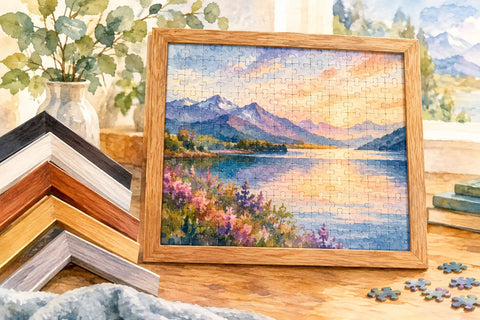
Frame colour has a big effect on how a puzzle reads from across the room. A slim black frame gives colourful artwork a gallery-style finish and works beautifully with modern interiors. Natural timber tones bring warmth to botanical scenes, vintage illustrations and softer palettes. White frames can make bright, playful designs feel light and fresh, particularly in children’s spaces.
The trade-off is contrast. A bold frame can define a pale image, but it may compete with a puzzle packed with colour and detail. If the artwork has a busy border, choose a quieter frame. If the puzzle design is minimal, a more distinctive frame or mount can add personality without overwhelming it.
Depth is worth considering as well. A deeper box-style frame can give a premium plastic puzzle enough room to sit comfortably without pressure from the front panel. It also creates a more substantial décor piece, especially for larger designs. Slim frames are ideal when you want the image to sit close to the wall and keep the look clean.
Why No-Glue Puzzles Need the Right Support
Traditional cardboard puzzles often need puzzle glue, adhesive sheets or mounting boards before they can be displayed. That process can be messy, permanent and unforgiving if the puzzle is not perfectly flat. Premium plastic puzzles offer a more display-friendly approach because their pieces are designed to interlock firmly.
No glue needed does not mean no care needed. Carry a completed puzzle with both hands and keep it as level as possible. For larger sizes, slide a firm board underneath before moving it. This reduces flexing and keeps the edges aligned as you transfer it into the frame.
Once inside, the backing should support the entire puzzle rather than only pinching the edges. Avoid packing the frame so tightly that it puts pressure on the pieces. The goal is secure, not squashed. If the frame has a little extra depth, a clean spacer or suitable backing layer can prevent movement without distorting the puzzle surface.
Water-resistant plastic pieces are also a practical advantage for display. They are easier to keep looking tidy than standard cardboard, especially in homes where little hands, curious pets or the occasional spill are part of daily life. Still, water resistance is not the same as making a frame waterproof. Keep framed artwork away from direct splashes, steam-heavy bathrooms and damp walls.
Puzzle Frame Quality and Where You Hang It
A great frame can only do so much if it is hung in the wrong spot. Direct afternoon sun is hard on any printed artwork, while heat from a fireplace, heater or kitchen can affect both the frame and its contents over time. Choose a stable indoor wall with moderate light where the image can be enjoyed often.
For a family area, secure hanging hardware is non-negotiable. Larger framed puzzles should be attached to suitable wall fixings rather than a light picture hook alone. If the frame is heavy, check the hardware rating and the type of wall before hanging it. A beautiful display is only useful if it stays safely in place.
Think about viewing height too. The centre of the artwork generally looks best around eye level, but a puzzle gallery can be more playful. Grouping several smaller framed puzzles in a hallway, stairwell or creative corner turns individual finishes into a collectible feature. Keep the frame styles consistent if you want a calm, curated look, or mix colours and shapes for something more joyful.
When a Standard Frame Is Enough - and When It Is Not
A ready-made frame is a brilliant option for common puzzle sizes, gifts and quick transformations. It is often more affordable, easier to replace and available in colours that suit most homes. If the fit is clean, the backing is firm and the glazing is clear, there is no need to overcomplicate it.
Custom framing is worth the extra spend when the puzzle has an unusual size, a special sentimental value or a design you want to keep on display for years. It also gives you more control over mount colour, glazing and frame depth. For a limited-edition artwork, a completed personalised puzzle or a statement-sized display, those details can lift the finished result from nice to genuinely special.
If you are choosing a frame as part of a gift, keep the recipient’s space in mind. A neutral frame is usually the safest choice for someone else’s home, while a colourful border can make a junior puzzle feel even more celebratory. Pairing a display-ready puzzle with the right frame turns one present into an activity, a memory and a piece of décor.
A Quick Check Before You Frame
Before closing the frame, make sure every piece is fully connected and the outer edges are straight. Wipe the front panel with a soft, clean cloth, then remove any dust from the puzzle surface with a gentle brush or blower. Avoid spraying cleaner directly near the completed puzzle.
Check the image orientation one last time, especially with designs that have no obvious top or bottom. Then stand back before hanging it. The best framed puzzles do more than fill a blank wall: they show off the colour, patience and creativity that went into every last piece.
Choose a frame that respects the artwork, supports the puzzle properly and suits the space it will call home. A finished puzzle is not just something you completed - it is something worth seeing every day.

Comments (0)
There are no comments for this article. Be the first one to leave a message!