
A splash of juice, sticky little fingers, a dusty shelf, or a puzzle that has spent months on display can all raise the same question: are puzzles washable? The honest answer is that it depends entirely on what the pieces are made from. A standard cardboard jigsaw and a premium water-resistant plastic puzzle may look similar once assembled, but they need very different care.
That difference matters if your finished puzzle is more than a rainy-day activity. When a puzzle is designed to become wall art, a clock, a vase, or a colourful talking point on the bookshelf, keeping its surface bright and its pieces snug is part of the fun.
Are puzzles washable? Start with the material
Most traditional jigsaw puzzles are made from printed paper layered over pressed cardboard. Cardboard absorbs moisture quickly, which means it can swell, soften, warp, and separate at the edges. Even a quick rinse can leave pieces with lifted artwork, fuzzy sides, or a shape that no longer locks neatly with its neighbours.
For that reason, cardboard puzzles are not washable in the usual sense. They should never be soaked, run under a tap, put in the dishwasher, or cleaned with a dripping-wet cloth. If a cardboard puzzle has a small mark, gentle spot cleaning is the safer option.
Plastic jigsaw puzzles are a different story. Quality plastic pieces are made to resist moisture rather than absorb it, so they are far better suited to everyday cleaning. Many premium plastic puzzle ranges can be wiped down or gently rinsed, making them a practical choice for families, collectors, and anyone who wants to display their finished work without worrying about every speck of dust.
Water-resistant does not always mean indestructible, though. Check the care guidance supplied with your specific puzzle, especially for puzzles with special finishes, printed metallic details, attached mechanisms, or decorative components.
How to clean a cardboard jigsaw puzzle safely
With cardboard, the goal is to remove surface dust or a small fresh mark without adding moisture to the board. Start with clean, dry hands and place the puzzle on a flat, dry surface. A soft microfibre cloth is usually enough for loose dust.
For a light smudge, use a barely damp cloth that has been wrung out thoroughly. It should feel almost dry to the touch, not wet. Dab the affected area gently rather than rubbing it, then leave the piece flat in a well-ventilated spot until completely dry. Do not use a hair dryer, heater, or direct sun, as fast heat can encourage curling and fading.
A white vinyl eraser can sometimes lift a dry scuff from an unprinted edge, but test it on a less visible piece first. Avoid household sprays, disinfectant wipes, paper towels, abrasive sponges, and fragranced cleaning products. These can damage the printed image even when the cardboard itself survives.
If a drink spill reaches a cardboard puzzle, separate any wet pieces as carefully as possible. Lay them face-up on absorbent plain paper and let them dry naturally. Trying to pull softened pieces apart aggressively can tear tabs and remove the printed layer. Sadly, some water damage cannot be reversed, which is one good reason to keep drinks away from an open cardboard puzzle session.
Washing plastic puzzles without harming the finish
Plastic puzzles make cleaning far less stressful. Their pieces are usually non-porous, durable, and made to click together securely, so a little water does not turn a puzzle session into a rescue mission.
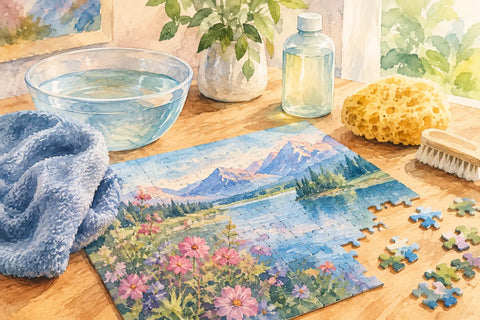
For everyday care, wipe assembled or loose pieces with a soft damp cloth, then dry with another clean cloth. This is ideal for removing fingerprints, dust, or a light food mark before framing or putting a puzzle décor piece on show.
If the manufacturer confirms that your puzzle can be rinsed, use cool or lukewarm water with a tiny amount of mild dishwashing liquid. Wash gently by hand, rinse away all soap residue, and dry each piece or assembled section thoroughly. Keep the water temperature mild. Very hot water can affect printed surfaces, joins, or specialised components over time.
Dishwashers are generally not the best choice unless the product instructions specifically say they are safe. Their heat, strong detergent, and long wash cycle are far harsher than a careful hand wash. The same caution applies to bleach, alcohol-heavy cleaners, solvent sprays, and scrubbing brushes. A puzzle may survive them once, but its glossy artwork or precise fit may not.
Drying matters as much as washing
After cleaning plastic puzzle pieces, spread them in a single layer on a clean towel with the printed side facing up. Pat away surface water and allow them to air dry fully before packing, assembling, or framing. Trapped moisture can leave water spots or encourage mould in a closed box, even when the pieces themselves are water-resistant.
For a completed flat puzzle, support the whole puzzle underneath before moving it. Premium interlocking plastic pieces hold together beautifully, but a large design can still flex if lifted only from one corner. A tray, puzzle board, or rigid piece of card makes cleaning and drying much easier.
Special care for 3D puzzle décor
A 3D puzzle vase, planter, globe, clock, or storage piece deserves a slightly more thoughtful approach. These designs are made to be used and displayed, but they may include bases, seals, clock movements, stands, or other parts that should not be submerged.
Wipe the outside with a soft damp cloth and dry it straight away. If a 3D vase is designed to hold water, follow its product directions for use and cleaning, particularly around the base and joins. Never assume that every puzzle-built vessel is suitable for standing water simply because it is made from plastic.
For clocks and puzzles with electronic or moving parts, remove batteries where appropriate and keep water well away from the mechanism. Clean the puzzle surface only. A quick wipe is usually all it takes to restore that fresh, display-ready look.
How to keep puzzles cleaner in the first place
The easiest puzzle to clean is the one that has not collected crumbs, spills, pet hair, and dust in the first place. A dedicated puzzle board or table gives your work a clean home and makes it easier to move when dinner, visitors, or family life takes over.
Wash and dry hands before starting, especially after snacks or moisturiser. Keep drinks in a lidded bottle or well away from the puzzle edge. If young puzzlers are involved, plastic puzzles offer welcome peace of mind because they can handle more of the wonderfully messy reality of family creativity.
For completed puzzles, framing or displaying them behind a clear cover reduces dust dramatically. Plastic jigsaw designs that lock together without glue are especially handy here: you can move them from table to frame with far less fuss, then enjoy the finished artwork rather than storing it back in a box.
Store unassembled pieces somewhere cool and dry, away from direct sunlight and damp cupboards. Humidity is particularly unkind to cardboard, while prolonged sunlight can fade almost any printed puzzle surface. Keep boxes closed and avoid stacking heavy items on top, as crushed corners and bent pieces are harder to fix than a bit of dust.
When should you replace a damaged puzzle?
A stained or slightly worn puzzle can still be full of character, especially if it is a much-loved family favourite. But replace it when pieces no longer fit safely, mould is present, cardboard layers are separating, or the surface has become sticky or badly damaged. For children, avoid using puzzles with softened, peeling, or sharp-edged pieces.
If you want a puzzle that can move confidently from hands-on hobby to permanent décor, material is worth considering before you buy. Premium water-resistant plastic puzzles are built for repeat assembly, easy care, and bright display value - a particularly satisfying choice for gifts, family tables, and collectors who want their finished picture to stay part of the room.
At Puzzle Art Store, that is the joy of choosing a puzzle designed to last: you can enjoy every click of the build, clean it with confidence where appropriate, and keep the finished artwork on show long after the final piece finds its place.

Comments (0)
There are no comments for this article. Be the first one to leave a message!