
Three minutes into a rainy afternoon, a flimsy puzzle with bent corners can turn a good activity into a small domestic crisis. The best educational puzzles for preschoolers do the opposite - they hold attention, support real skill-building, and feel satisfying enough that little hands want to come back for another round.
For preschool-aged children, the right puzzle is never just about keeping them busy. It is about matching challenge to ability, giving them a win they can see, and building habits like patience, concentration and problem-solving without making it feel like homework. That is why quality matters more than many parents expect. Durable pieces, clear artwork, and a design that actually suits the age group can make all the difference.
What makes the best educational puzzles for preschoolers?
A good preschool puzzle teaches something, but it should still feel playful first. At this age, children learn best through repetition, touch, colour, and trial and error. A puzzle that looks beautiful but is too complex will likely be abandoned. One that is too easy may hold attention for about thirty seconds.
The sweet spot is a puzzle that stretches a child just enough. That may mean chunky pieces for a younger three-year-old, or a more detailed jigsaw for a confident four- or five-year-old. Preschoolers are still developing fine motor control, visual discrimination and spatial awareness, so puzzles should support those skills rather than frustrate them.
Material matters too. Cardboard can work, but frequent use by young children tends to reveal every weak edge quickly. If you are choosing puzzles for regular play, gifting, or to hand down to younger siblings, sturdier formats are often the smarter buy. Premium plastic puzzle styles are especially appealing because they are more resistant to wear, easier to keep looking fresh, and satisfying to assemble when the pieces click together securely.
1. Shape matching puzzles
If you are shopping for a younger preschooler, shape matching puzzles are a strong place to start. These introduce the basic logic of puzzles without requiring advanced picture recognition. Children learn to compare outlines, rotate pieces, and notice differences between circles, squares, stars and more unusual forms.
They also pull double duty for early maths language. Parents naturally start saying things like corners, sides, bigger, smaller and same shape, which helps build vocabulary while children play. The best versions keep the shapes bold and distinct rather than overcomplicating the board.
2. Alphabet puzzles
Alphabet puzzles are popular for good reason, but the best ones are not always the flashiest. Preschoolers need clear letter forms, pieces that are easy to pick up, and enough repetition to actually remember what they are seeing. Bright colours help, but too much visual clutter can make recognition harder.
These puzzles support letter familiarity, hand-eye coordination and early phonics conversations. They work especially well when adults keep the tone light. Rather than turning it into a quiz, it is more effective to chat about words that start with each letter and let the child place pieces at their own pace.
3. Number and counting puzzles
Number puzzles can be excellent for preschoolers who enjoy sequences and patterns. Some focus on recognising numerals, while others introduce one-to-one counting with pictures of animals, fruit or everyday objects.
The trade-off is that number puzzles vary a lot in complexity. A simple 1 to 10 puzzle may be ideal for one child and far too easy for another. Look for designs that keep the counting visual and concrete. Preschoolers usually respond better when they can see five ducks rather than just the numeral 5 on its own.
4. Animal and nature jigsaw puzzles
Animal puzzles are often the first themed jigsaws children genuinely fall in love with. They tap into natural curiosity, and they create easy opportunities for conversation about habitats, sounds, colours and movement.
This category works particularly well when the illustration is clean and expressive. A preschooler can spot a lion’s mane or a penguin’s shape much faster than they can interpret a crowded, highly detailed scene. If the puzzle is designed with sturdy interlocking pieces, it becomes even more rewarding because children can see the picture come together and keep it intact without the whole thing sliding apart.
5. Vehicles and construction puzzles
Not every child is interested in letters before they are interested in diggers, trains or fire engines. Vehicle puzzles are excellent for visual learners who connect more quickly with recognisable objects than abstract concepts.
These puzzles build classification skills as well as vocabulary. Children start noticing differences between a bus and a truck, or a helicopter and an aeroplane. For some preschoolers, a strong theme is what keeps them engaged long enough to practise focus.
6. Layer puzzles for sequencing and discovery
Layer puzzles add another level of learning because children uncover what sits underneath each piece. A tree might reveal roots, a house might reveal rooms, or an animal might reveal a baby version or a habitat scene.
This makes them particularly good for curious preschoolers who enjoy cause and effect. They encourage memory, sequencing and observation. They are also one of the better options for children who get bored with flat picture matching alone.
7. Map and world puzzles
For older preschoolers, simple map puzzles can be surprisingly engaging. These introduce the idea that places fit together in a larger picture. It might be a basic world map, a country map, or a puzzle focused on landmarks and wildlife.
The key is keeping expectations realistic. At preschool age, this is less about geography mastery and more about recognising regions, animals and symbols. A well-designed map puzzle opens the door to bigger conversations later without overwhelming the child now.
8. Colour and pattern puzzles
Some of the best educational puzzles for preschoolers are not based on words or numbers at all. Colour and pattern puzzles build visual discrimination, logic and concentration. Children learn to notice what changes, what repeats, and what belongs together.
These are especially useful for children who enjoy sorting, arranging and spotting differences. They can also be calming. There is something satisfying about fitting colours and patterns into order, particularly when the pieces are well made and pleasant to handle.
9. Chunky first jigsaws
Chunky jigsaws are ideal for preschoolers who are just moving beyond simple peg boards. Bigger pieces make success more accessible, and they help develop grip strength and placement control. For younger children or those still building confidence, this kind of puzzle can feel achievable from the first go.
That matters more than parents sometimes realise. Early success builds the confidence needed for more complex puzzles later. If a child experiences repeated frustration at the beginning, they may decide puzzles are not for them when the real issue was simply that the fit was too difficult.
10. Story-based puzzles
A story puzzle gives children more than a finished picture. It gives them a scene to talk about. Maybe it shows a farm morning, a trip to the beach, or animals preparing for bed. This supports language development because children naturally start describing what they see.
These are a smart pick for families who want conversation-rich play. The educational value comes not only from assembling the image but from retelling, predicting and imagining what happens next.
11. Durable plastic jigsaw puzzles
For families who want puzzles that last, durable plastic jigsaws stand out. They are particularly appealing in homes where puzzles are used often, packed away repeatedly, or shared across siblings. The pieces keep their shape, the finished result feels neat and secure, and the puzzle is far less likely to end up looking tired after a handful of uses.
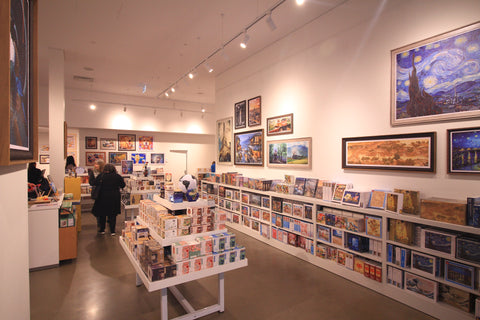
This is also where display value enters the picture. Some premium plastic puzzle styles stay together firmly enough to be shown off once completed, with no glue needed. For preschoolers, that can be a huge confidence booster. Their effort becomes something visible, not something swept back into a box straight away. At Puzzle Art Store, that idea of puzzles as both play and display is a big part of the appeal.
12. Simple 3D puzzles for hands-on learners
Not every preschooler connects best with a flat jigsaw. Some prefer building upwards, slotting parts together, and seeing an object take shape. Simple 3D puzzles can support spatial reasoning in a very direct way.
The catch is that age suitability matters even more here. Very complex 3D designs are better left for older children, but beginner-friendly options can be brilliant for preschoolers who love construction toys and tactile problem-solving.
How to choose the right puzzle for your child
Age labels are useful, but they are not the whole story. One four-year-old may happily complete a 48-piece puzzle, while another still prefers chunky six-piece sets. Interest level often matters just as much as developmental stage. A child obsessed with marine life will usually persist longer with a whale puzzle than with a generic educational design.
Piece count is one factor, but not the only one. Piece size, image clarity and material quality all affect how difficult a puzzle feels. A smaller piece count with muddy artwork can be harder than a larger puzzle with obvious visual cues.
It is also worth thinking about how the puzzle will be used. If it is for everyday family play, durability should be high on the list. If it is a special birthday gift, something collectible, beautifully designed and easy to showcase can make it feel more memorable. The nicest preschool puzzles do not have to look disposable or purely functional. They can be playful, premium and gift-worthy at the same time.
A well-chosen puzzle gives a preschooler more than a way to pass the time. It gives them a small challenge, a clear result, and that lovely little moment when the final piece clicks into place and they realise they did it themselves.


Comments (0)
There are no comments for this article. Be the first one to leave a message!