
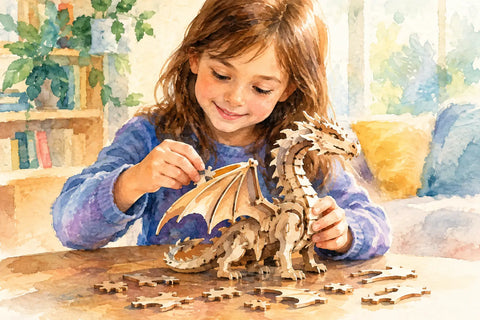
Can kids build 3D puzzles? Absolutely - provided the puzzle suits their age, patience and confidence level. The best moment is not always when the final piece clicks in. It might be when a child realises their flat pile of pieces has become a working clock, colourful globe or little planter they can proudly put on their shelf.
3D puzzles give children a satisfying step beyond the usual jigsaw. They still get the fun of finding shapes, colours and patterns, but they also learn how parts can form a solid object. For families looking for a screen-free activity with a real finished result, that makes them an especially rewarding choice.
Why 3D puzzles can be brilliant for kids
A well-chosen 3D puzzle asks children to look closely, think ahead and keep trying when a section does not work the first time. Those are useful skills, but the experience should still feel like play. A puzzle that is too difficult can turn an exciting gift into a half-finished project on the dining table.
The physical nature of a 3D build is part of the appeal. Children can see walls rise, a curve take shape or a base become sturdy enough to hold the rest of the design. That visible progress gives many young puzzlers more motivation than a large flat jigsaw, where the image only comes together near the end.
Premium plastic puzzle pieces are particularly handy for family builds. They are firm, durable and water resistant, rather than easily bent cardboard. When the pieces are designed to interlock securely, the finished object can stay together without glue. That means less mess, fewer worries about a treasured creation coming apart, and a display piece worth keeping.
Can kids build 3D puzzles at every age?
Not every 3D puzzle is right for every child, and age guidance on the packaging should always lead the decision. Small pieces can be a choking hazard for younger children, while complex builds may need a parent nearby even for an enthusiastic older child.
For preschool-aged children, simple chunky construction activities and age-appropriate puzzles are usually the better starting point. They are still developing the fine motor control needed to press pieces together accurately, and they benefit from short, achievable sessions.
Primary-school children are often ready for junior 3D puzzles with clear image sections, manageable piece counts and an obvious build order. They may enjoy creating an animal, landmark, vehicle or colourful container, especially if the result has a purpose beyond the puzzle session.
Older children and teens can take on more detailed models, functional designs and builds with repeating patterns. A 3D globe, vase or clock can feel less like a toy and more like a creative project for their room. The right choice depends less on a child’s exact age than on how they respond to challenge. Some love a tricky problem; others prefer quick wins they can finish in one afternoon.
Choose the right first 3D puzzle
The first project should create confidence, not test endurance. Start by looking at the piece count, size of the pieces and the shape of the finished item. A large, attractive model with a modest number of clearly differentiated pieces is often more successful than a tiny, highly detailed puzzle with hundreds of similar-looking parts.
Consider the child’s existing puzzle habits too. A child who happily completes a 100-piece jigsaw may enjoy a junior 3D model, but the switch from flat assembly to building upwards still changes the challenge. Curved sections, locking tabs and the need to follow a sequence can require a little guidance.
It also helps to pick a theme they already care about. A child fascinated by geography may persist with a globe. Someone who loves bright rooms and craft projects may be delighted by a puzzle vase or planter. When the finished piece has a place in their world, it is easier to stay engaged through the fiddly bits.
Look for these practical features when comparing options:
- Clear age recommendations and instructions that show the build order.
- Pieces large enough for the child to handle comfortably.
- Strong interlocking construction, so completed sections do not constantly fall apart.
- A finished design they will want to display, use or gift.
Set up the build for success
A calm setup makes a noticeable difference. Choose a firm, well-lit table where the puzzle can stay undisturbed if the build takes more than one session. Keep drinks away from the pieces, even with water-resistant materials, and give younger children a tray or shallow box so pieces do not disappear under chairs.
Before anyone starts pressing pieces together, take a minute to look through the instructions. Show the child how numbered pieces, symbols or colour blocks work, then let them lead where possible. It is tempting for an adult to take over when the first curved section proves stubborn, but a small prompt is usually more helpful than doing it for them.
Try language that keeps the problem in the child’s hands: “Which shape do you think belongs beside that one?” or “Let’s check the picture for the next colour.” If a piece does not fit, encourage them not to force it. Turning it, checking its number or revisiting the previous step often solves the problem.
Short sessions are completely fine. Twenty focused minutes can be more enjoyable than an hour spent pushing through fatigue. If the child walks away while still feeling positive, they are more likely to come back keen to finish.
The trade-off: challenge versus independence
There is a sweet spot between a puzzle that feels impressive and one that needs constant adult rescue. A child can build a more advanced 3D puzzle with help, and shared builds can be wonderful family time. But if every stage requires an adult, the child may feel like an observer rather than the maker.
For a birthday gift, choose slightly easier than you think if the child will be opening it with a crowd around them. They will want visible progress quickly. For a rainy-weekend project with a parent or grandparent, a more involved design can be a great choice because the conversation and teamwork are part of the experience.
Functional 3D puzzles also deserve a little care in the selection process. A vase, planter or clock may look impressive, but check whether the child can manage the assembly steps and whether the finished item will be used safely in its intended spot. A lightweight model on a stable shelf is often a better first display project than something likely to be knocked over during play.
Make the finished puzzle part of the celebration
The final click is only one part of the fun. Let the child choose where their puzzle lives. A globe can become a desk feature, a small planter can brighten a study nook, and a decorative model can sit proudly among books and trophies. Display turns the effort into an achievement that lasts.
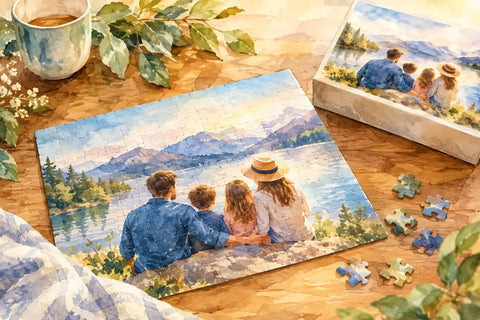
If the puzzle is designed to stay together without glue, moving it into place is simpler and less messy. For flat puzzles, framing may be the natural next step; for 3D designs, a shelf, desk or bedside table gives the finished object room to shine. Take a photo too. Children often enjoy seeing their creation documented, especially if they later build a more complex version and can compare their progress.
A 3D puzzle does not need to be finished perfectly or quickly to be worthwhile. Choose one that meets your child where they are, offer help without taking over, and give their finished creation a place where it can be admired. That is how a handful of pieces becomes a little piece of art they will remember making.

Comments (0)
There are no comments for this article. Be the first one to leave a message!