
A puzzle can have a gorgeous image, hundreds of satisfying details and the perfect level of challenge, yet still disappoint if the pieces feel loose, ambiguous or frustratingly similar. This guide to puzzle piece fit explains what makes a puzzle satisfying to build and why fit matters so much when your finished design is destined for a frame, a shelf or a spot on the wall.
For a display-ready puzzle, the goal is not simply to complete the picture. You want each section to hold its shape when lifted, moved and admired. That is where material, cut style and manufacturing quality make a real difference.
What does puzzle piece fit mean?
Puzzle piece fit describes how accurately neighbouring pieces connect. A good fit feels clear: the tabs and blanks meet neatly, the image lines up, and the connection has enough resistance to stay in place without forcing it. You should feel a small, confident click or settle when the correct pieces join.
Poor fit creates the opposite experience. Pieces may sit beside one another without truly locking, several pieces may appear to fit the same opening, or a completed area may separate as soon as you shift it. That can turn a peaceful afternoon of puzzling into an exercise in second-guessing.
Fit is often confused with difficulty, but they are not the same thing. A 1,000-piece puzzle with similar sky colours can be challenging because the artwork demands patience. It should still have precise connections. A difficult image and a vague cut are very different things.
Why a snug fit changes the whole puzzle experience
A secure fit makes assembling more enjoyable because it gives you useful feedback. When a piece belongs, you know it. You can build small sections with confidence, join larger groups, and move completed areas without watching the whole scene drift apart.
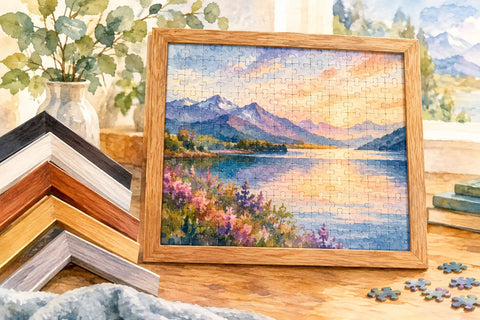
This matters even more for puzzles that become décor. If you plan to frame a finished cityscape, floral illustration or bold abstract design, a stable puzzle surface makes the final steps far easier. With quality interlocking plastic pieces, there is no glue needed to keep the image together for display. That is especially handy for renters, gift buyers and anyone who would rather spend their weekend puzzling than wrestling with adhesive.
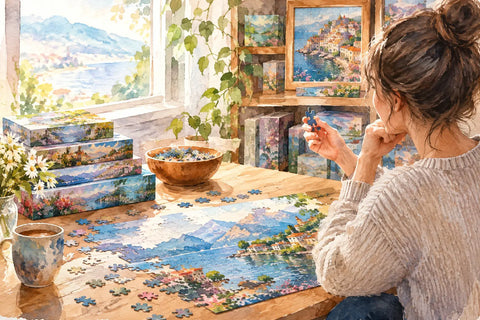
A close fit can also make puzzling more social. When family members work on different corners of the table, completed sections can be carefully brought together instead of rebuilt from scratch. For children, a clear fit helps build confidence too. They learn to look at shape, colour and image detail rather than pushing pieces into places where they only almost belong.
The materials behind a better puzzle piece fit
Cardboard puzzles
Traditional cardboard puzzles range enormously in quality. Better versions use thick board, crisp cutting and a backing that resists bending. Even so, cardboard is affected by pressure, humidity and repeated use. A piece that has been bent or softened may not sit as flat or connect as firmly as it did on day one.
Cardboard remains a familiar, lightweight option, particularly for casual puzzling. But if your priority is a long-lasting finished puzzle that can become part of your home, its limitations are worth considering. Glue, a puzzle saver sheet or a carefully handled frame is often needed before it can be moved safely.
Premium plastic puzzles
Plastic jigsaw pieces are designed for a different kind of finish. Their firm construction helps pieces retain their shape, while a precise moulded cut gives each connection a more defined hold. When the pieces interlock properly, you can often lift a completed section or the entire puzzle as one piece.
That changes what is possible after the last piece goes in. Instead of packing the puzzle away, you can frame it, prop it on a display stand or turn it into a lasting artwork. Water resistance is another practical advantage. A small spill does not automatically spell disaster, although it is still sensible to wipe the puzzle dry and avoid soaking joins or printed surfaces.
At Puzzle Art Store, this display-first approach is central to premium plastic puzzle designs, including flat artworks and 3D builds such as vases, clocks, planters and globes. The fit is not just part of the building process. It is what allows the completed piece to function as décor.
A guide to puzzle piece fit: what to look for before you buy
You cannot test every puzzle from a screen, but product details can reveal a lot. Start with the material. If you want a puzzle that can be moved, framed or displayed without glue, look for interlocking plastic construction and clear statements about its display capability.
Then consider the intended use. A large panoramic scene may look spectacular above a desk, but it needs a firm fit and a frame suited to its dimensions. A 3D puzzle vase needs pieces that lock accurately enough to create a stable functional form. A children’s puzzle benefits from chunkier, easy-to-handle pieces that make successful connections obvious.
The image also affects how fit feels. Highly detailed artwork gives more visual clues, so you can confirm a connection through both the image and the cut. Large areas of one colour, such as ocean, clouds or dark night skies, ask more of your sorting skills. These designs can be wonderfully absorbing, but choose a reliable piece fit so the challenge comes from the artwork, not from guesswork.
Finally, check the puzzle’s piece count and finished size. More pieces do not automatically mean better fit. They usually mean smaller pieces, a longer build and more visual complexity. Select the count that suits the recipient’s patience, table space and display plan.
How to tell whether a piece really belongs
The temptation to force a near-match is familiar to every puzzler. Resist it. A correct connection should need gentle pressure only. If the tabs bend, the pieces rise at the edges or the image does not align perfectly, take the piece back out and try again.
Use three checks together: shape, artwork and surface level. The shape should settle naturally, the printed details should continue cleanly across the join, and the pieces should sit flat at the same height. On a well-made puzzle, all three signals agree.
Be careful with apparent fits around repeated patterns. A row of blue tiles, dense foliage or similar windows may give you a convincing but incorrect connection. Before building too far, trace the outlines of the section and compare nearby colours, shadows and directional lines. It is quicker to correct two misplaced pieces now than to dismantle an entire corner later.
Getting the best fit while you build
Your work surface matters. Build on a flat, clean table with enough room to sort edge pieces, colour groups and completed sections. A warped tray, soft bedspread or uneven dining table can make even good pieces seem less secure.
Start by turning every piece image-side up. Find the corners and edge pieces, then group distinctive features such as lettering, strong colour blocks, faces, architecture or patterned borders. This is not about making the puzzle too easy. It gives you stable landmarks, which helps you test connections against the wider image.
Avoid repeatedly pulling apart correctly joined plastic pieces just to test alternatives. The pieces are durable, but purposeful handling keeps the build tidy and protects the printed finish. When you need to move a section, support it from underneath with both hands or slide a thin board beneath it rather than lifting from one corner.
Good lighting is another quiet hero. Natural daylight or a bright lamp reveals subtle colour changes and makes tabs, blanks and image edges easier to see. If you puzzle at night, reduce glare by placing the light slightly to the side rather than directly overhead.
When a tight fit is not always the right fit
A very firm connection is brilliant for display puzzles, travelling builds and 3D objects. However, some puzzlers prefer a slightly looser traditional feel, especially when they enjoy sorting through pieces quickly or rebuilding favourite designs often. There is no single best fit for every person or puzzle style.
For young children, the priority is usually easy recognition and sturdy handling rather than an ultra-fine, intricate cut. For serious collectors, the ideal may be a precise fit that supports a gallery-worthy finish. For a birthday gift, consider the recipient's experience level alongside the image. A beautiful design that is too difficult may sit unopened, while a well-chosen puzzle becomes a memorable activity and a finished keepsake.
Temperature and storage can play a part too. Keep puzzles flat and away from prolonged direct sun, damp areas and heavy items stacked on top. Even durable plastic pieces deserve a little care if you want the completed artwork to look sharp for years.
The best puzzle fit gives you confidence at every stage: when you find the right piece, when you bring sections together, and when you decide the finished image deserves more than a return to the box. Choose a design you genuinely want to see every day, then let each satisfying click carry it from tabletop pastime to artwork.

Comments (0)
There are no comments for this article. Be the first one to leave a message!