
A finished puzzle deserves better than a quick photo on the dining table before it is packed away. When you protect puzzle artwork surfaces properly, the colour stays brighter, the pieces stay clean, and your completed design remains ready to frame, display or admire for years.
That protection looks a little different depending on the puzzle. Premium plastic puzzles have a major advantage: their snug interlocking pieces can hold together without glue, and their water-resistant surface is far less vulnerable than traditional cardboard. Even so, a finished puzzle is still a display piece. Sunlight, dust, greasy fingers, moisture trapped behind a frame and careless moving can all take the shine off a design you spent hours completing.
Start with the right finishing method
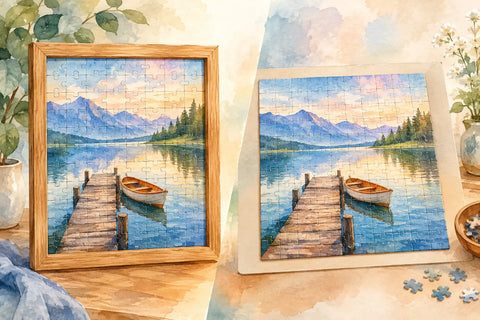
Before choosing a frame or display spot, decide whether your puzzle is meant to stay portable, become wall art, or take on a practical role in your home. A 2D plastic jigsaw with tightly connected pieces can often be lifted as one piece and placed directly into a frame. That means no glue needed, no drying time, and no cloudy sealant layer over the printed artwork.
For cardboard puzzles, glue is commonly used to hold the image together. It can be useful, but it is a permanent choice. Glue may alter the surface sheen, seep through gaps, or make it difficult to correct a misplaced piece later. If you love changing your displays, a puzzle-saving sheet, backing board or purpose-made frame can be a better option than committing to adhesive.
Plastic puzzle artwork is particularly suited to flexible display. You can frame it now, move it later, or store it safely between seasons without turning a favourite collectible into a one-location-only piece.
Let the puzzle settle before handling it
Once the final piece clicks in, resist the urge to immediately lift the whole puzzle from one corner. Check that every connection is properly seated, especially around the outer edge. On a premium plastic puzzle, apply gentle, even pressure with clean hands across any raised joins.
If the puzzle has been assembled on a mat or board, slide a firm sheet of clean cardboard, foam board or a puzzle board underneath before moving it. Keep the artwork level. Bending is the enemy of cardboard puzzles, while twisting can loosen even a well-connected plastic design.
Protect puzzle artwork surfaces from daily wear
The easiest protection happens before the puzzle reaches the wall. Keep hands clean and dry while assembling, and avoid building directly beside cooking splashes, scented candles, open windows or a busy family snack zone. Oils from skin do not always show straight away, but they can leave a dull patch on glossy pieces over time.
Dust is less dramatic, but it is persistent. A displayed puzzle collects airborne particles just like framed prints, shelves and furniture. For an unframed plastic puzzle, use a clean, dry microfibre cloth and wipe very lightly across the surface. Do not scrub the joins or use paper towels, which can drag grit across the printed finish.
A lightly damp cloth may be suitable for a water-resistant plastic puzzle when there is a small mark, but use only plain water and wring the cloth out thoroughly first. Wipe gently, then dry the surface straight away with a second soft cloth. Never soak the puzzle, run it under a tap, or use harsh sprays, solvents, abrasive cleaners or furniture polish. Water resistance is excellent for everyday peace of mind, not a reason to treat artwork like a chopping board.
Cardboard puzzles need a drier approach. Do not use a damp cloth on the printed face or exposed edges. A soft brush, camera-lens blower or very gentle dry microfibre wipe is safer. If a cardboard puzzle has already absorbed moisture or started to ripple, placing it under a heavy object can sometimes flatten it, but the result is never guaranteed.
Choose a frame that works as protection
Framing gives a completed puzzle a polished, gallery-ready finish, but the wrong frame can create problems. The goal is to keep the artwork supported, clean and protected from knocks without pressing so tightly that the surface bends or the pieces shift.
Measure the finished puzzle, not the advertised box size. Puzzle dimensions can vary slightly, and a frame that is only just too small can bow the edges. A close-fitting frame with a firm backing board is ideal. If the puzzle is slightly smaller than the frame opening, use a neat border or mount rather than forcing it into place.
Clear acrylic glazing is a practical choice for homes with children, pets or active hallways because it is lighter and less breakable than glass. Glass can offer excellent clarity and scratch resistance, but it needs careful handling. Either way, make sure the glazing does not sit directly against the puzzle face if there is any chance of condensation. A spacer or suitable frame depth creates a small air gap and helps prevent the image sticking to the cover.
For a premium plastic puzzle, the frame is often there to protect the artwork and elevate the look rather than hold every piece together. That is the beauty of precision-fit construction: your finished image can remain recognisably a puzzle while displaying like a print.
Avoid direct sun and steamy rooms
Where you hang your puzzle matters as much as how you frame it. Direct sunlight can fade inks and make colours look tired over time, particularly vivid blues, reds and dark tones. A bright room is fine, but choose a wall that does not receive strong afternoon sun for hours each day.
Bathrooms, laundries and poorly ventilated kitchens are also risky places for puzzle artwork. Steam and changing humidity can affect cardboard quickly and may cause condensation inside any frame. Water-resistant plastic puzzles handle accidental splashes far better, but their frames, backing boards and surrounding décor still benefit from a dry, stable environment.
A living room, study, bedroom or sheltered hallway is usually a better fit. Consider the viewing height too. Place a special piece where it can be enjoyed, but not where bags, chairs, prams or energetic pets will constantly brush past it.
Store finished puzzles without scratching them
Not every completed puzzle needs to be on display all year. Rotating your puzzle art keeps a room feeling fresh and gives seasonal, holiday or collector designs their moment. Safe storage is what makes that possible.
For flat puzzles, keep the finished artwork supported between two rigid, clean boards that are slightly larger than the puzzle itself. Wrap the sandwich in acid-free tissue, a clean cotton cloth or a protective sleeve before storing it flat in a dry cupboard. Avoid garages, sheds, roof spaces and areas close to external walls, where temperature swings and damp can be more severe.
Do not stack heavy books, boxes or décor directly on top. Even plastic pieces can develop pressure marks or loosen at the corners when weight sits unevenly for months. For framed artwork, store it upright with padding between frames, much like a picture shop would, rather than laying several glazed frames face-to-face.
If you are storing a puzzle before framing, label the protective boards with the puzzle name and size. This small step saves a surprising amount of rummaging later, especially when a collection includes mini puzzles, magnets, cards and full-sized statement pieces.
Give 3D puzzle décor its own care routine
A puzzle vase, planter, clock or globe is not simply wall art in a different shape. It is a functional display item, so protection begins with using it as designed. For example, a puzzle vase should be treated according to its intended water-holding construction, while a decorative planter may need an inner pot or liner to keep soil and moisture away from the puzzle surface.
Keep 3D pieces on stable, level furniture away from the edge. A felt pad underneath can prevent scuffs on both the puzzle and your tabletop. Dust curved surfaces with a soft brush or dry microfibre cloth, taking care not to push into seams.
For clocks and globes, avoid prolonged direct sun and handle moving parts gently. Their charm comes from the fact that they are usable objects as well as conversation-starting puzzle art. A little regular care lets them stay both.
When a small repair is worth making
A loose piece, scratched area or warped corner does not always mean the display is ruined. First, remove the puzzle from a high-traffic spot so the problem does not worsen. With plastic puzzles, check whether the piece simply needs to be reseated from the back on a flat surface. Avoid forcing a connection, as that can damage tabs or surrounding pieces.
For a framed puzzle with dust or movement inside, it is often better to reopen the frame and reset the backing rather than trying to poke or press the artwork through the front. If the design is especially valuable to you, a professional framer can help with mounting and glazing choices.
The best repair is usually prevention: clean hands, a stable base, thoughtful framing and a display position that lets the artwork shine without putting it in harm's way.
A completed puzzle carries the memory of every colour sorted, edge found and final click. Give it a place that feels just as considered. With water-resistant, display-ready puzzle pieces and a little everyday care, your next finish can stay part of your home, not just part of the pastime.


Comments (0)
There are no comments for this article. Be the first one to leave a message!